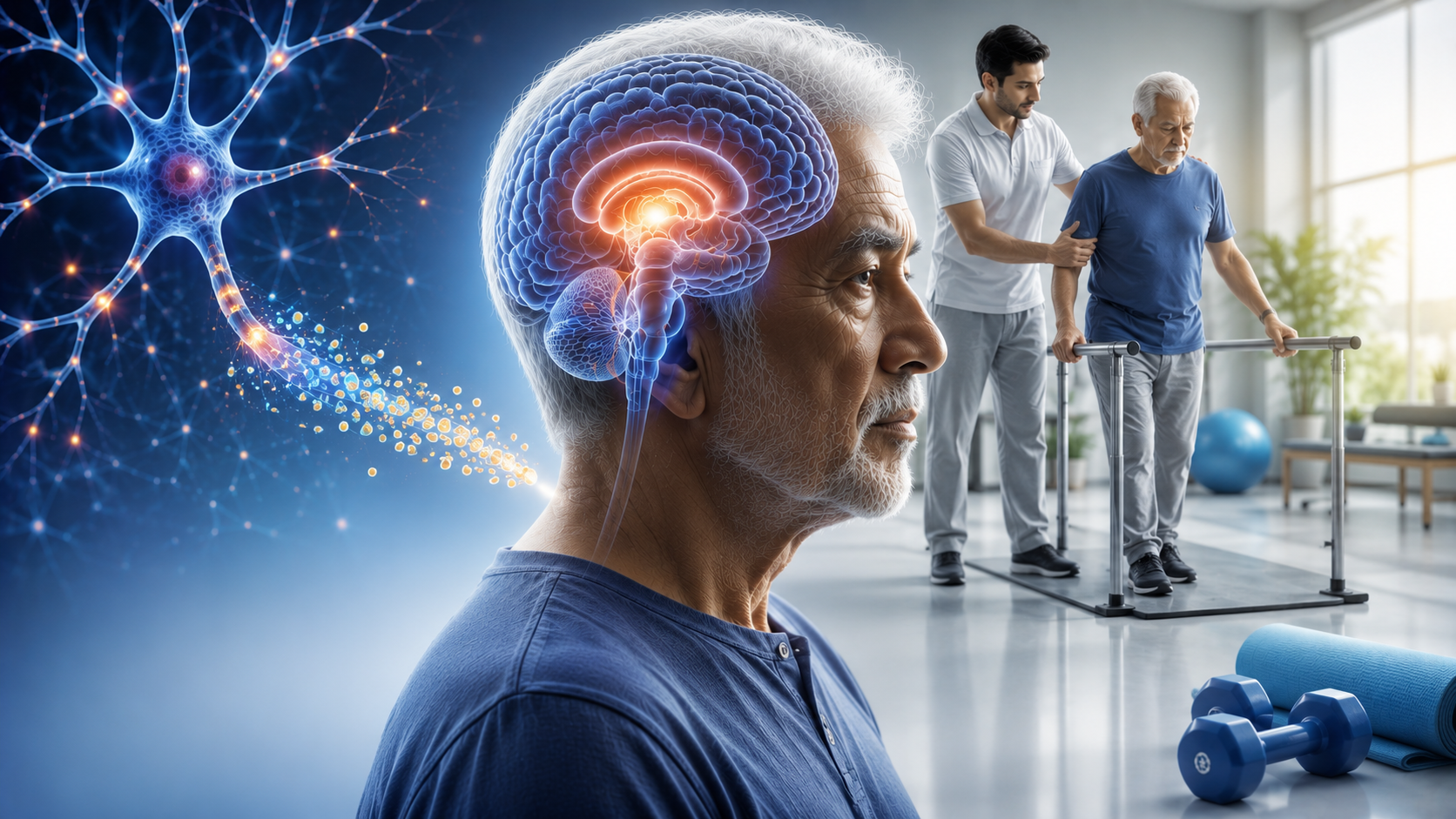
Parkinson's disease is a progressive neurological disorder affecting movement, balance, and coordination. Early diagnosis, personalized treatment, and continuous neurological care help improve mobility, reduce symptoms, and enhance quality of life.
About Parkinson's Disease
Parkinson’s disease is a progressive neurological disorder that primarily affects movement due to the gradual loss of dopamine-producing nerve cells in the brain. Dopamine is essential for controlling smooth and coordinated muscle movements. As dopamine levels decrease, patients may experience tremors, stiffness, slow movements, balance problems, and difficulty performing daily activities.
Although Parkinson’s disease cannot be cured, early diagnosis and comprehensive neurological care can effectively manage symptoms, slow disease progression, and improve overall quality of life. Treatment is tailored to each patient’s condition, age, lifestyle, and symptom severity.
At Dr. Naveen Kumar Venigalla’s practice, patients receive comprehensive evaluation, accurate diagnosis, personalized medication management, rehabilitation, and long-term follow-up to help maintain independence and improve daily functioning.
Symptoms
Symptoms usually develop gradually and worsen over time.
Parkinson’s disease develops due to degeneration of dopamine-producing nerve cells in the brain. While the exact cause remains unknown, both genetic and environmental factors may contribute to its development.
Parkinson’s disease is a progressive neurological disorder affecting movement, balance, coordination, and muscle control due to reduced dopamine production.